Rehabilitation & dignity
Rehabilitation & everyday dignity · 10.3% supply · ×1.22
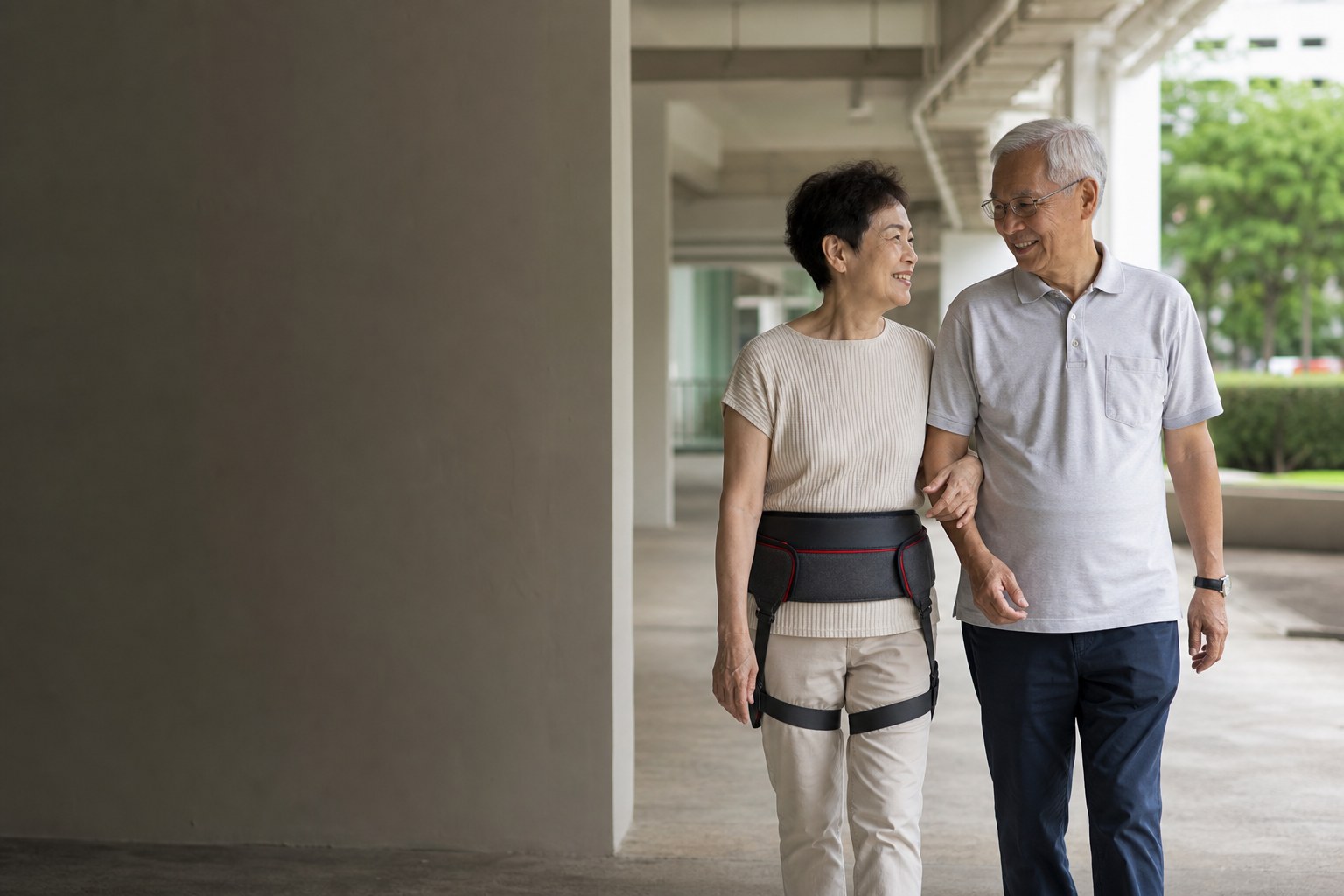
Aging in place with a powered exoskeleton: what changes at home
How a 2.4 kg powered hip exoskeleton takes up to 80% of the load off every step, so older adults in Singapore keep the stairs, the market run and the afternoon walk — and stay in their own home.
Read the guide →
Buying an exoskeleton for a parent: a caregiver's guide
What to check before buying a powered exoskeleton for an elderly parent — fit, weight, assistance level, how to raise it without hurting their pride, and the questions worth asking at the fitting.
Read the guide →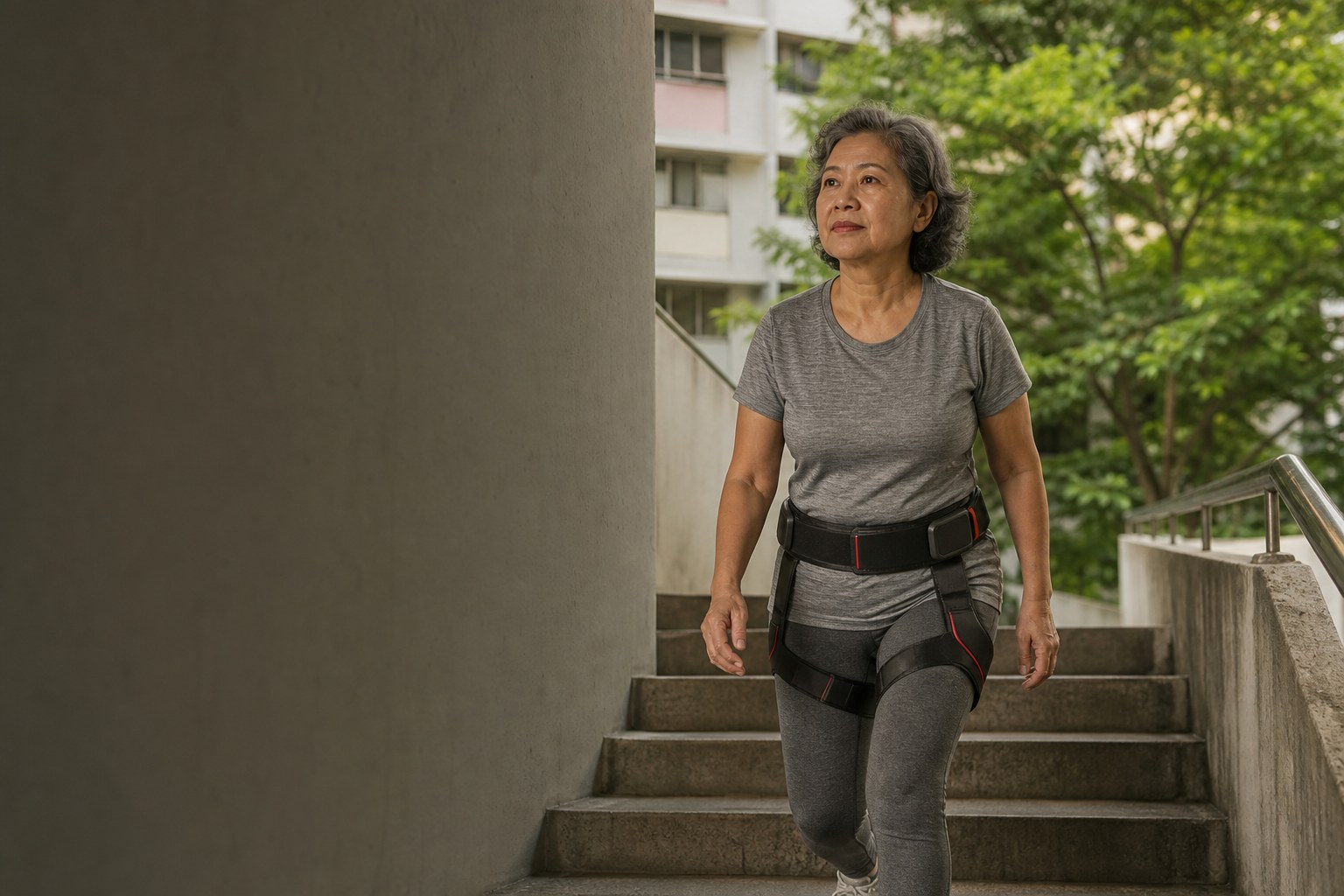
Exoskeleton vs cane, walking frame and wheelchair: what each restores
A straight comparison of four mobility options by what they actually restore — balance, load, distance or seating — and where a powered hip exoskeleton fits between a cane and a wheelchair.
Read the guide →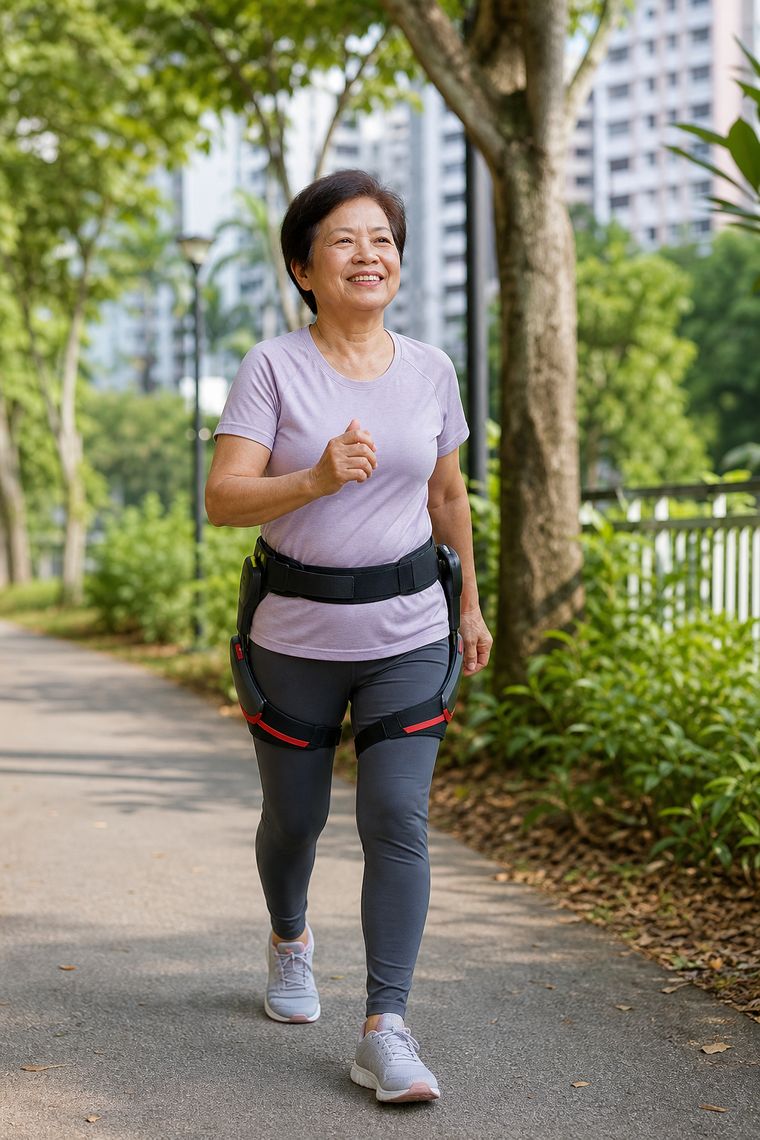
A physiotherapist's guide to powered hip exoskeletons
What a physiotherapist needs to know before a client tries a consumer powered hip exoskeleton: what it assists, who it suits, what to watch and how to judge it.
Read the guide →After a hip or knee replacement: where a hip exoskeleton fits
Where a powered hip exoskeleton can fit into life after a joint replacement, where it does not, and what to clear with your surgeon and physiotherapist first.
Read the guide →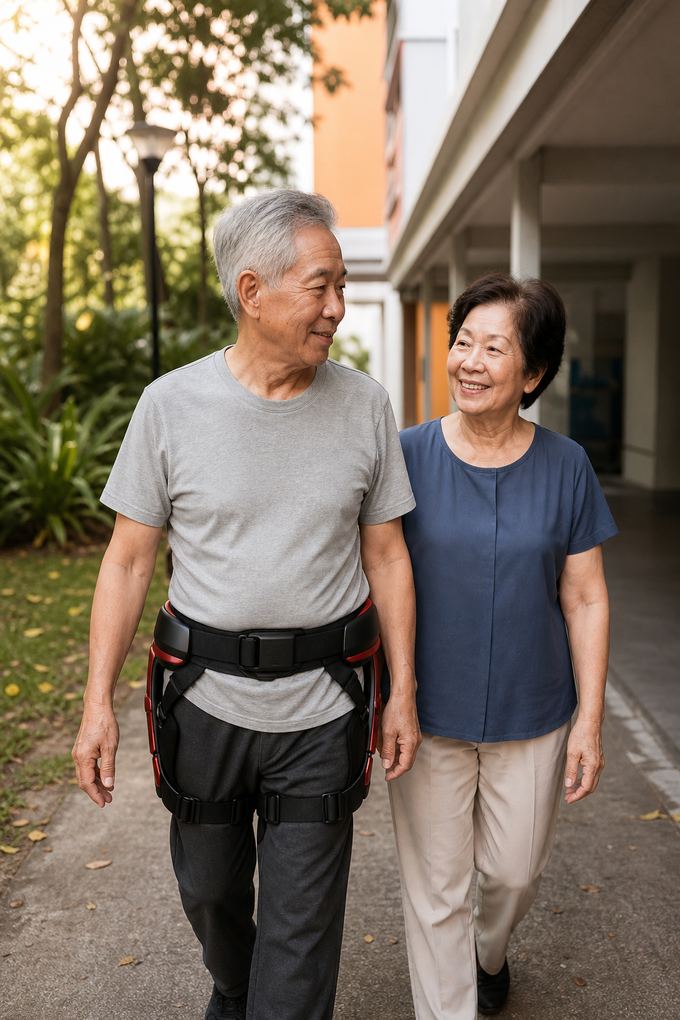
How to put on a hip exoskeleton seated: a calm routine
A seated, step-by-step routine for putting on and taking off a powered hip exoskeleton when bending, balance or stiff joints make getting dressed hard.
Read the guide →Fear of falling: rebuilding walking confidence after a fall
Why fear of falling shrinks daily life, how to rebuild walking confidence step by step, and where a powered hip exoskeleton fits — and where it does not.
Read the guide →Keeping a daily walk in your 70s and 80s in Singapore
A realistic daily walking routine for older adults in Singapore: timing around the heat, routes with rest stops, building distance and when assistance helps.
Read the guide →Wearing a mobility aid without feeling old
Pride, looks and questions from strangers stop many people using a walking aid. Practical ways to handle them, and why a hip exoskeleton reads differently.
Read the guide →Who a powered hip exoskeleton is not for: an honest checklist
When a powered hip exoskeleton is the wrong choice, or needs a doctor's go-ahead first, so families can decide quickly and spend money wisely.
Read the guide →Is it working? What to track in the first month with an exoskeleton
A simple, equipment-free log for the first month with a powered hip exoskeleton: what to write down, what good progress looks like, and when to adjust.
Read the guide →Keeping up with the grandchildren: school runs and playgrounds
For grandparents who look after grandchildren in Singapore: the school walk, the playground and long outings on tired legs — and where hip assist helps.
Read the guide →Walking together again: pacing outings with an older parent
How adult children and helpers can plan shared walks with an older parent: pace, routes, rest stops, heat and the quiet signs of tiredness.
Read the guide →Getting the home ready for a powered exoskeleton: a checklist
Where to keep it, where to charge it, which chair to dress in and what to clear from the floor: a home checklist before a powered hip exoskeleton arrives.
Read the guide →Specs, explained
Plain-language spec & proof literacy · 2.6% supply · ×8.52
What 16 Nm of hip torque actually does for your body
Torque is the number every exoskeleton brand shouts and almost none explains. Here is what 16 Nm at the hip means in plain terms — on a stair, on a slope, and across a full day.
Read the guide →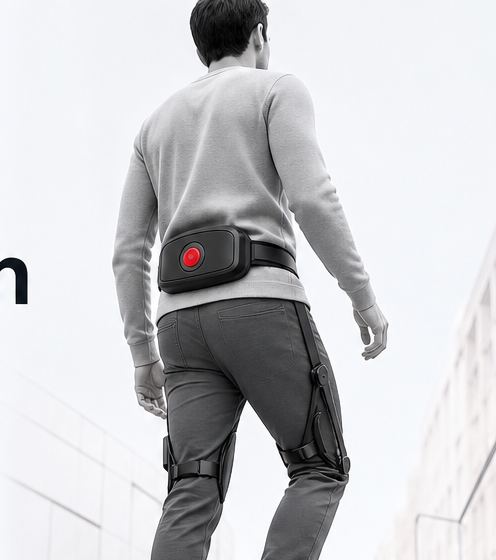
Exoskeleton battery life: what 4 hours of assist really covers
Battery figures are quoted in hours but spent in terrain. Here is what 4 hours of assistance and a 2-hour recharge cover across a commute, a day of errands and a day hike.
Read the guide →
IP54 explained: what tropical-grade sealing means for an exoskeleton
What the two digits in IP54 actually certify, why tropical-grade sealing matters more in Singapore than almost anywhere else, and exactly where the limit sits for a powered hip exoskeleton you wear every day.
Read the guide →How to read an exoskeleton spec sheet: the numbers that matter
Torque, weight, battery, charge time, IP rating, joints assisted and control: a plain-language walk through an exoskeleton spec sheet, line by line.
Read the guide →
Is 2.4 kg heavy for an exoskeleton? Where the weight sits
What 2.4 kg feels like worn at the waist, why where weight sits matters more than the total, and what happens to that weight when the battery runs flat.
Read the guide →"Up to 80%": how to read exoskeleton performance claims
What "up to 80% less load" and "2–3× range" can and cannot tell you, the questions to ask any exoskeleton brand, and how to test a claim on your own route.
Read the guide →
How exoskeleton energy savings are measured: metabolic cost
What "metabolic cost" means, how labs measure the energy spent walking, why results vary so much, and how to read a claim like 35% less energy on climbs.
Read the guide →Powered vs passive exoskeletons: what is the difference?
Passive exoskeletons use springs and elastic; powered ones use motors, sensors and a battery. How each works, what each is good at, and which suits walking.
Read the guide →Hip, knee or ankle exoskeleton: which joint should be assisted?
What each joint does in a step, what hip, knee and ankle exoskeletons change, and how to match the joint to the problem: stairs, stamina, support or push-off.
Read the guide →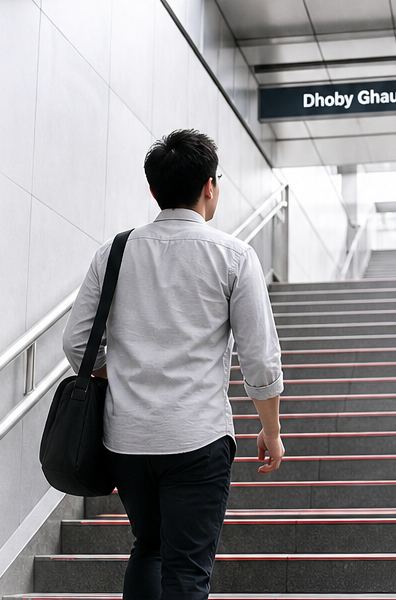
How does an exoskeleton know when to help? Gait sensing explained
How a powered exoskeleton reads your walking, decides when to push and switches between flat ground, stairs and slopes — and why timing beats strength.
Read the guide →Medical vs consumer exoskeleton: what the label means in Singapore
What separates a medical exoskeleton from a consumer mobility-assist device, who regulates medical devices in Singapore, and what the label means for buyers.
Read the guide →How a hip exoskeleton should fit: sizing, straps and pressure points
What a good fit looks and feels like on a hip exoskeleton — belt height, thigh straps, joint alignment — and the signs that sizing needs adjusting.
Read the guide →Before you buy an exoskeleton: 12 questions to ask the seller
Twelve plain questions to ask any exoskeleton seller before you buy — specs, claims, fitting, battery, servicing, returns — and what good answers sound like.
Read the guide →Stairs & the last mile
Stairs, commutes & the last mile · 6.5% supply · ×0.41

Powered hip assist for stairs: MRT stations, bridges and HDB blocks
Stairs are where a powered hip exoskeleton is most obviously useful and least often demonstrated. What actually changes on a deep MRT staircase, an unsheltered overhead bridge and the last flight up to the flat.
Read the guide →What 30–50% less exertion feels like on a Singapore commute
A Singapore commute is walked, not driven — interchanges, overhead bridges and two last miles a day. What changes when 30–50% of that exertion comes off, and who it is actually for.
Read the guide →Walking in Singapore heat: pacing a hot, humid commute
How to walk a Singapore commute in heat and humidity without arriving drained: timing, shade, pacing on stairs and bridges, water and hip assist.
Read the guide →When the HDB lift is down: getting up many floors safely
What to do when the lift at your HDB block is out of service: pacing a long stair climb, when not to try it, planning ahead and where hip assist helps.
Read the guide →Park connector walks with hip assist: planning longer routes
How to plan longer walks on Singapore's park connectors: flat sections, rest and toilet stops, sharing paths with cyclists, battery planning and hip assist.
Read the guide →
Steep slopes and ramps: what hip assist changes, up and down
Slopes are quieter than stairs but just as tiring: how to walk steep paths, ramps and hilly estates in Singapore, and what hip assist does up and down.
Read the guide →Travelling with a powered exoskeleton: airports and flights
How to fly and travel with a powered hip exoskeleton: lithium battery rules, security screening, long airport walks, charging abroad and sightseeing.
Read the guide →On your feet all shift: hip assist for jobs with lots of walking
For security, cleaning, retail, hospital and delivery staff: managing a walking-heavy shift, stairs and fatigue — and where powered hip assist fits.
Read the guide →Sitting on the MRT or bus with an exoskeleton on
What happens when you sit down wearing a powered hip exoskeleton: posture detection, train and bus seats, standing in a crowd and getting off steadily.
Read the guide →Outdoor, measured
Adventure / raw-robotics hero · 47.7% supply · ×0.69
Trekking poles vs a powered exoskeleton: where the effort goes
Poles move effort to your arms. A powered hip exoskeleton removes it at the joint doing the climbing. A measured comparison — and when poles are still the right answer.
Read the guide →Bukit Timah Hill with and without hip assist: measure it yourself
A simple, fair way to measure what powered hip assistance changes on Bukit Timah Hill: same route, same pace, two climbs, and the five numbers worth recording.
Read the guide →Knee brace vs powered hip assist for hiking: what each changes
A measured comparison for hikers: what a knee brace does, what powered hip assistance does, where each helps on climbs and descents, and when to use both.
Read the guide →Try it on your own route.
Exclusive Singapore seller. A guided fitting on your own route — home, trail or commute.