Can a powered exoskeleton help an older adult stay living at home?
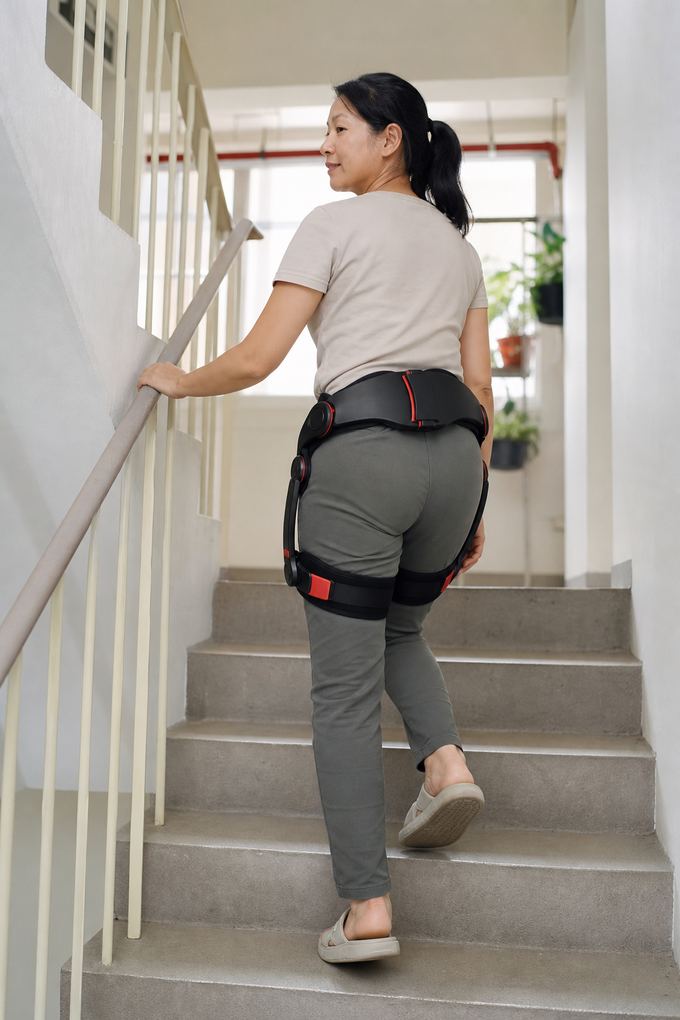
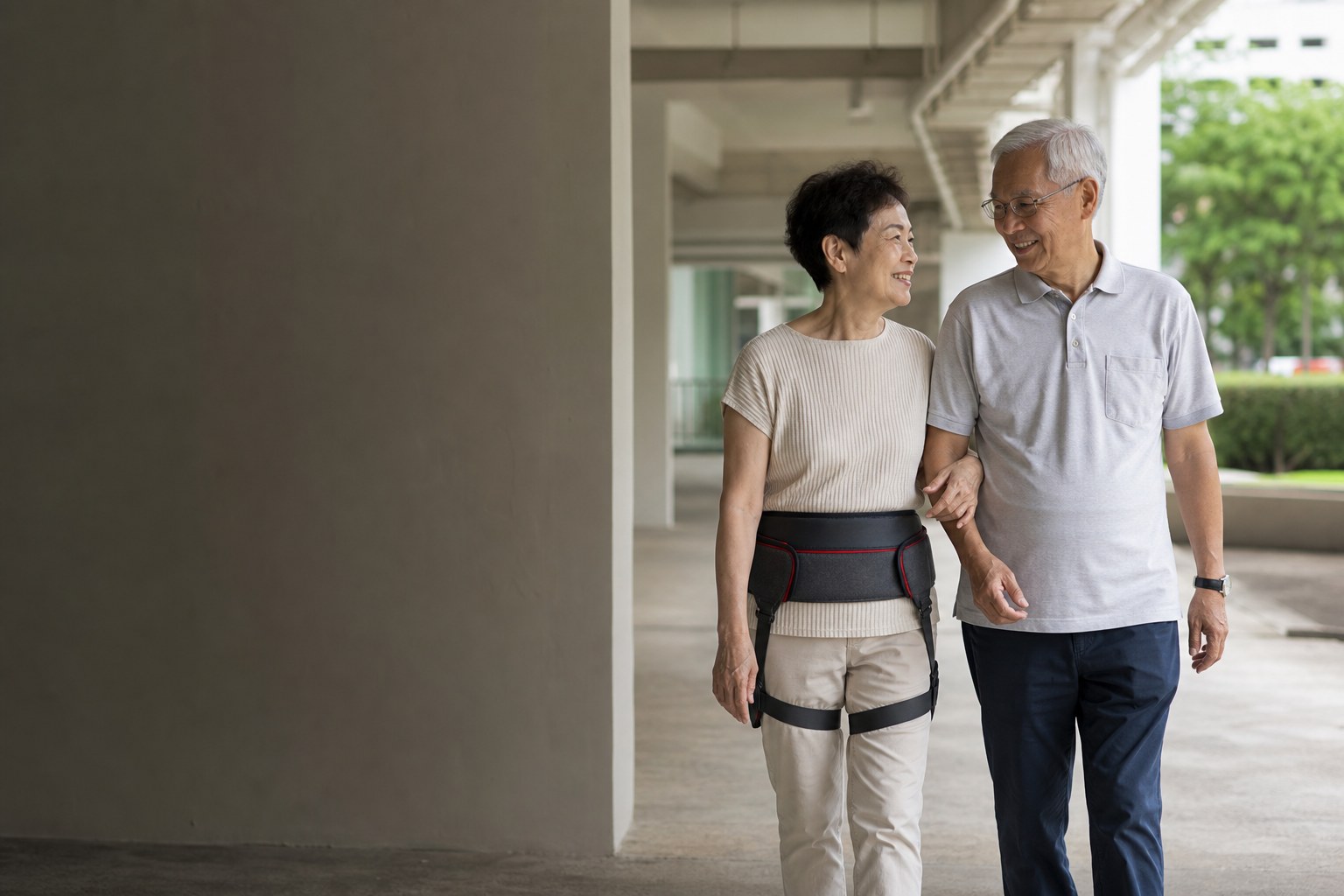
Yes. A powered hip exoskeleton like the ExoStride US-H-1.0Pro removes up to 80% of the lower-body load from each step and adds up to 16 Nm of assistance exactly when the hip lifts. That is usually the difference between managing the stairs, the walk to the market and the afternoon stroll — and giving them up. It weighs 2.4 kg, folds, needs no app, and is worn over normal clothing at home without a prescription.
What aging in place actually breaks down to
Staying at home is rarely lost in one dramatic moment. It is lost one route at a time. The stairs to the flat become a negotiation. The walk to the wet market gets shortened, then dropped. The afternoon stroll becomes a chair by the window. Each is small; together they are the whole question of whether someone still lives their own life in their own home.
- Stairs and kerbs — the first routes to go.
- Distance — the market, the coffee shop, the clinic.
- Confidence — the fear of the fall arrives before the fall.
How a powered hip exoskeleton changes those routes
The US-H-1.0Pro is not a fixed-speed motor strapped to a belt. It reads the gait and adds torque at the moment the hip flexes — the muscle group that actually costs the most on a stair or an incline. Practically, that means:
- Up to 80% less lower-body pressure, or 3–5x less load per step.
- One button. Assistance begins the moment they stand — no app, no menu, nothing to learn.
- Posture detection pauses assistance when they sit, and resumes when they rise.
- 2.4 kg and foldable — lighter than a bag of groceries, and it stows by the door.
Restoration, not replacement
This is the line that matters, and it is the one the category keeps getting wrong. A wheelchair replaces walking. A powered hip exoskeleton keeps the person walking — their own gait, their own legs, their own pace, with the hardest 80% of each step taken off the top. Mobility restoration for older and recovering users is the first thing ExoStride was built for, not an afterthought bolted onto an adventure product.
A realistic first fortnight
Nobody should go from the sofa to a five-kilometre walk. A guided fitting sets the assistance level, and the first two weeks usually look like this:
- Days 1–3 — flat ground indoors and the corridor, 10–15 minutes.
- Days 4–7 — one flight of stairs, then the lift lobby and back.
- Week 2 — the route that was given up first. Usually the market.