Is a powered exoskeleton practical for a daily commute?
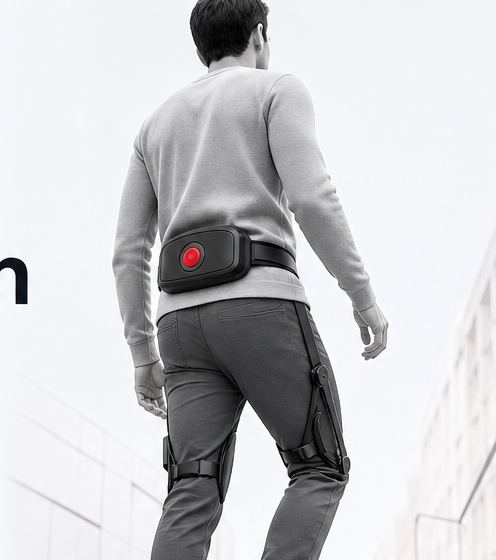
For a walking-heavy commute, yes. The US-H-1.0Pro reduces exertion by 30–50% across a normal day, weighs 2.4 kg, folds under a desk, needs no app and is IP54-rated for rain. It is worn over clothing at the waist and reads as active-wear rather than hardware. The honest limit: if your commute is a car and a lift lobby, this is not for you.
The commute is walked here
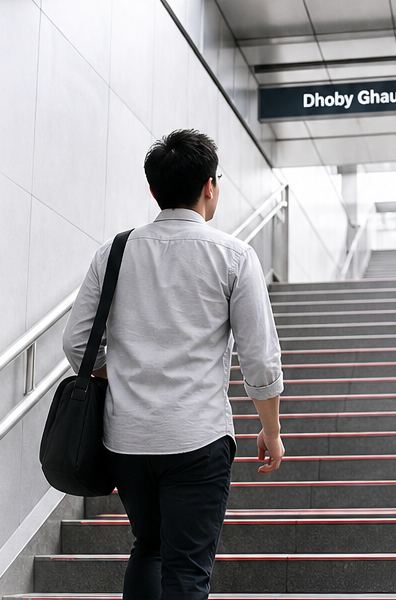
Singapore's public transport is excellent, which is exactly why the commute is physical. The train does not come to your door. A typical day includes a walk to the station, a deep interchange, an overhead bridge, a last-mile walk at each end, and often a covered walkway that is longer than it looks. None of it registers as exercise. All of it is charged to the same energy budget as the rest of your evening.
Where the 30–50% actually shows up
Not evenly. Assistance concentrates where the cost concentrates:
- Station stairs and overhead bridges — the largest single reduction, because that is where the hip flexors are loaded.
- Long interchange tunnels — a small per-step saving, multiplied by several hundred steps.
- The last mile home — the stretch where fatigue is already accumulated and the saving is felt most.
The practical questions people actually ask
Does it fit under a desk — yes, it folds to 2.4 kg. Does it look obvious — it is a slim hip unit worn over clothing and reads as active-wear. Does it survive the rain — IP54, so yes. Does it need charging at work — a 2-hour full charge means one desk session covers the return trip. Does it need an app — no; one button, and posture detection handles the rest.
Who this is honestly not for
If you drive door-to-door, or your commute is a lift lobby and a carpark, the assistance has nothing to act on. The same is true of a short flat walk with no stairs. This use case earns its keep on stair-heavy, distance-heavy days — and it is worth being clear about that before a fitting rather than after.